How Michael Ende’s Work Is Grossly Underrated
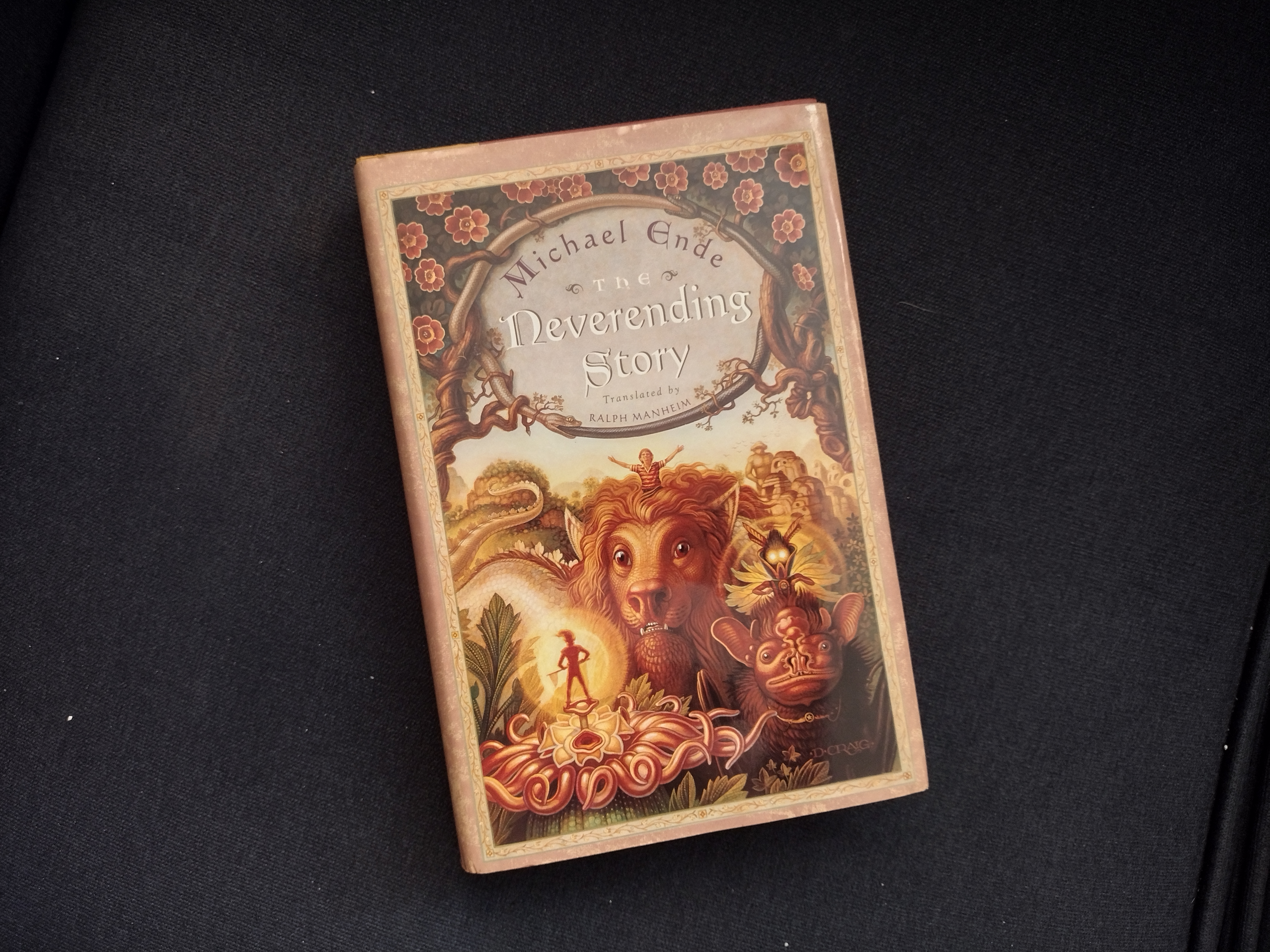
It was a couple of years ago that I found out this was a book.
When I watched this movie as a child, I had no idea. The movie itself didn’t pull any punches or explain much. There were quite a few questions I had regarding what happened to Artax in the Swamp of Sadness and why Atreyu wasn’t so affected by it as Artax was.
I didn’t really develop a distaste for how the movie ended until much later.
The Neverending Story II: The Next Chapter was alright but I didn’t care much for the recasting of parts.
It was also many many years later until I realized the the second movie strayed in many ways from the last half of the book.
I’m fond of telling all of you that when I do own a book in multiple formats, it’s my highest recommendation. This is one of those books. I own it in Hardcover, Ebook and Audiobook.
I made a huge mistake in listening to the audiobook in public. When it came to The Swamp of Sadness, I had to switch to listening to something else.
I made the right call.
In any case, there are serious lessons in here that we’d do well to remember, specifically the interaction between Atreyu and Gmork. There’s a bit of dialogue between the two. Gmork, the werewolf has been hunting Atreyu in service of The Nothing. Gmork has been goaded by The Manipulators, the power behind The Nothing and he says this and this is our first of many lessons.
Gmork goes on to explain that The Nothing is a result of our desire as humans to grow older, stop believing or imagining, dismiss it all out of hand and those beings from Fantastica that are consumed by The Nothing are then changed into lies in our world, used to manipulate us. This is one of the areas that the movie did stay true to the source material, in terms of the conversation itself but the ending to it was much different between book and film.
Gmork tells Atreyu that there’s no better tool to manipulate us than the lie. It takes advantage of our belief systems and continues to poison us. In short, the beings of Fantastica, because of our choices to never visit that country, become shambling undead zombies of their former selves, poisoning us along the way.
The biggest reason I recommend this book to any and everyone who will listen is that this is the intersection of all fantasy and imagination. It’s truly difficult to summarize it but to say, read the damn book.
The 1979 novel by Michael Ende will truly bring about your appreciation for folklore, fairy tales and literature in general again.
Keep in mind that it was published only half a decade after D&D hit store shelves.
It was said in the book that even the vampires paid respected The Childlike Empress because, without her, none of them could exist.
What Michael Ende did with his book is make Fantastica and The Ivory Tower the central hub of all characters imagined and their respective worlds. If any of this sounds familiar, it’s because we’ve been delving into multiverses to the point of obsession with the Marvel and DC movie offerings as well as in gaming with Dungeons & Dragons: Planescape, Journeys Through The Radiant Citadel, Dr. Strange, Flashpoint, etc. These many worlds have a point of interaction and a very real world-breaking threat posed to it with the point being that imagination and our suppression of it can cause more problems than it solves. It’s juxtaposed against the feelings of grief and loss with Bastian Bux’s love for reading and fantastic worlds and his own father’s grief causing him to disconnect from Bastian to the point where he’s sullen, feeling alone and isolated and doing bare minimums for his own son after his wife and Bastian’s mother’s untimely death. Bastian’s own father is completely disconnected from the magic of imagination while Bastian has fled to it to a fault. There’s a definite schism between the two and, though we don’t see a lot of Bastian’s father initially, we are given enough background to establish the differences between the two.
Bastian’s father is simply sleepwalking through life because he’s lost in his grief while Bastian is bullied constantly because he’s a bit of a bookworm. Gmork is illustrating the problem that is occurring in society here in the real world, however, he’s also talking about the extremes in behavior between father and son. Bastian represents the conservation of the imaginative and fantastic. Bastian’s father is lost in a very bleak world where his hope has been decimated and, in short, The Real World Sucks and, for him, there’s no escape.
The way the first half of the book wraps is similar to how the movie wraps but there are major differences. The interaction between Bastian and The Childlike Empress is somewhat the same. The first thing Bastian has to do is give her a name in order to save Fantastica. Then he has to make a wish upon the last fragment of Fantastica, a grain of sand. Upon him and through The Childlike Empress, all of Fantastica could simply be wished back into existence. Bastian has been given ultimate power, the power to wish for anything as much as he likes. There are no limits to his wishing
This is where the similarities between screen and page end. He doesn’t fly Falkor over his bullies and cause them to flee in panic. Instead, Bastian is now in Fantastica and this is where the similarities between the book and second movie sort of begin.
The movie and book both show you that Bastian’s wishing takes memories from him, causing him to forget certain things. He and Atreyu start as friends and then find themselves at odds with each other. There’s a female antagonist who poison’s Bastian’s thinking but those are the only similarities. The book is so much more intense. At first, when questioned on certain issues, Bastian’s answers come across as though he’s lying until you take into account that he is losing memories and things become worse as the memories, one by one, disappear. When Bastian finally catches on, he begins a desperate attempt to regain them all under the realization that his wishful thinking is destructive and there are others goading him to continue acting under that very wishful thinking until all of his memories are gone and the reconstructed Fantastica will be plunged into darkness.
By the time this book ends, you will feel like you have been on a journey unlike that you’ve ever been on before. It is an exhaustive read but one you will enjoy.
You can find a copy in hardcover, Kindle edition, or even on Audible but if you want to read this book for free or listen to it for free, go to Hoopla Digital Dot Com (if your library participates) and be sure to use your library card to read it over your phone or tablet at absolutely no cost.
 The Ravens Nest
Leave a comment