Addressing Fun Ways To Learn History
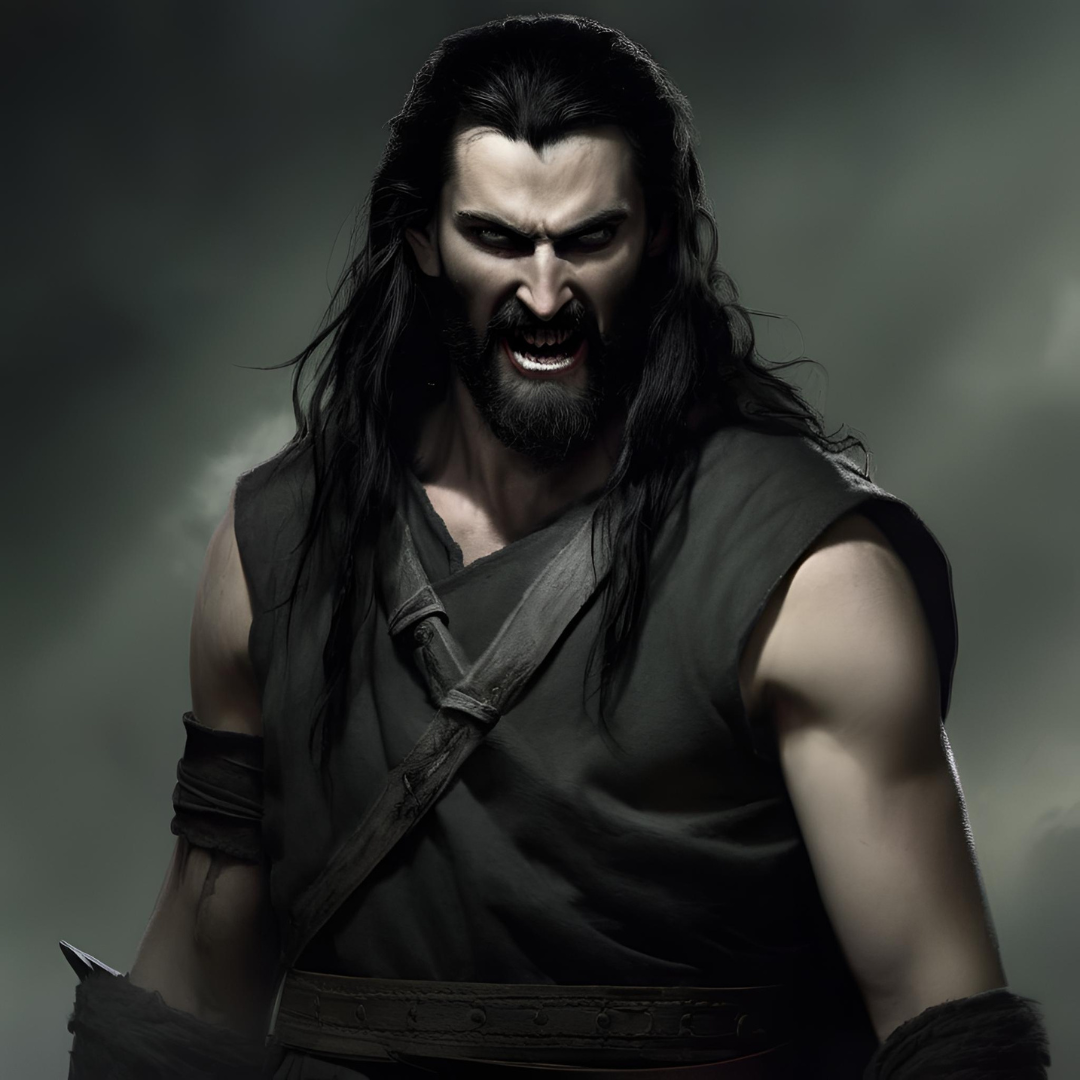
So it’s no secret that I’m loving the game Thousand Year Old Vampire and I’ve been wanting to get back into it.
If you haven’t read the series, let me link you to my Against All Odds Blog where you can check it out for yourself.
Part 1, Part 2, Part 2.5, Part 3
As stated in my review of the game, it’s a solo journaling game that requires only a d6 and a d10. You roll both and subtract the result of the d6 from the result of the d10 and you either move forward that many prompts or you go back that many prompts, depending on what the result is at the time. Once on that prompt then you read it and that’s your cue, you take off writing an entry. You can do this in longer form or you can do it in the equivalent of a tweet, all depending on your style.
My idea was to have a young man, set in first-century Germania and have him turned during the Battle of Teutoberg Forest. For that time period, and remember when we’re doing vampires being one thousand years old or more, there’s gonna need to be some historical elements that need to be accurate enough to immerse both myself and you, the person reading it.
Well, I know I can go to the library, I can use the internet but I’m playing an RPG and I need that creative license so, being the old-school guy I am, this is what I used last night…
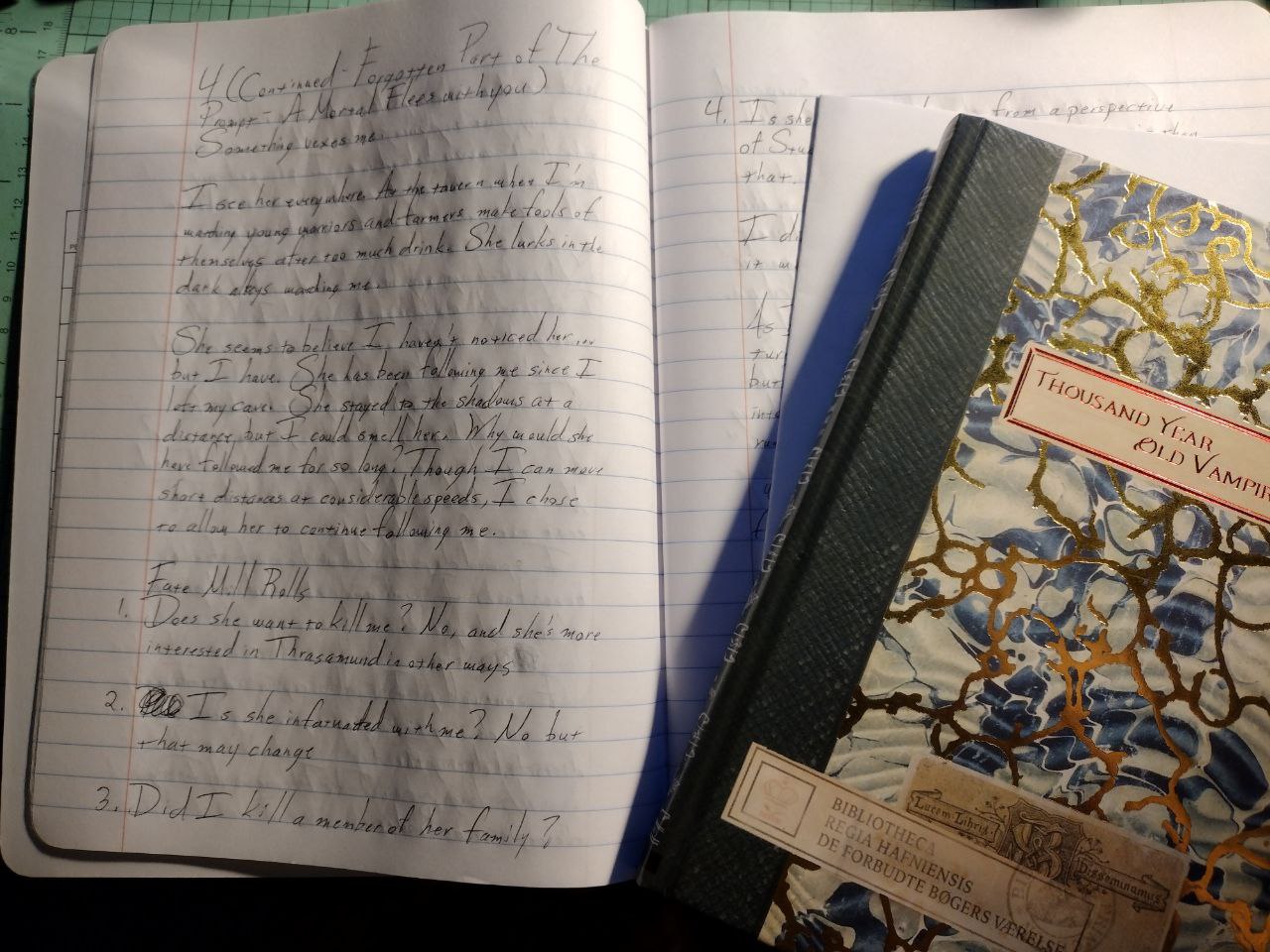
You can see the Fate Mill Die rolls. Not everything from what is hand-written makes it onto the screen.
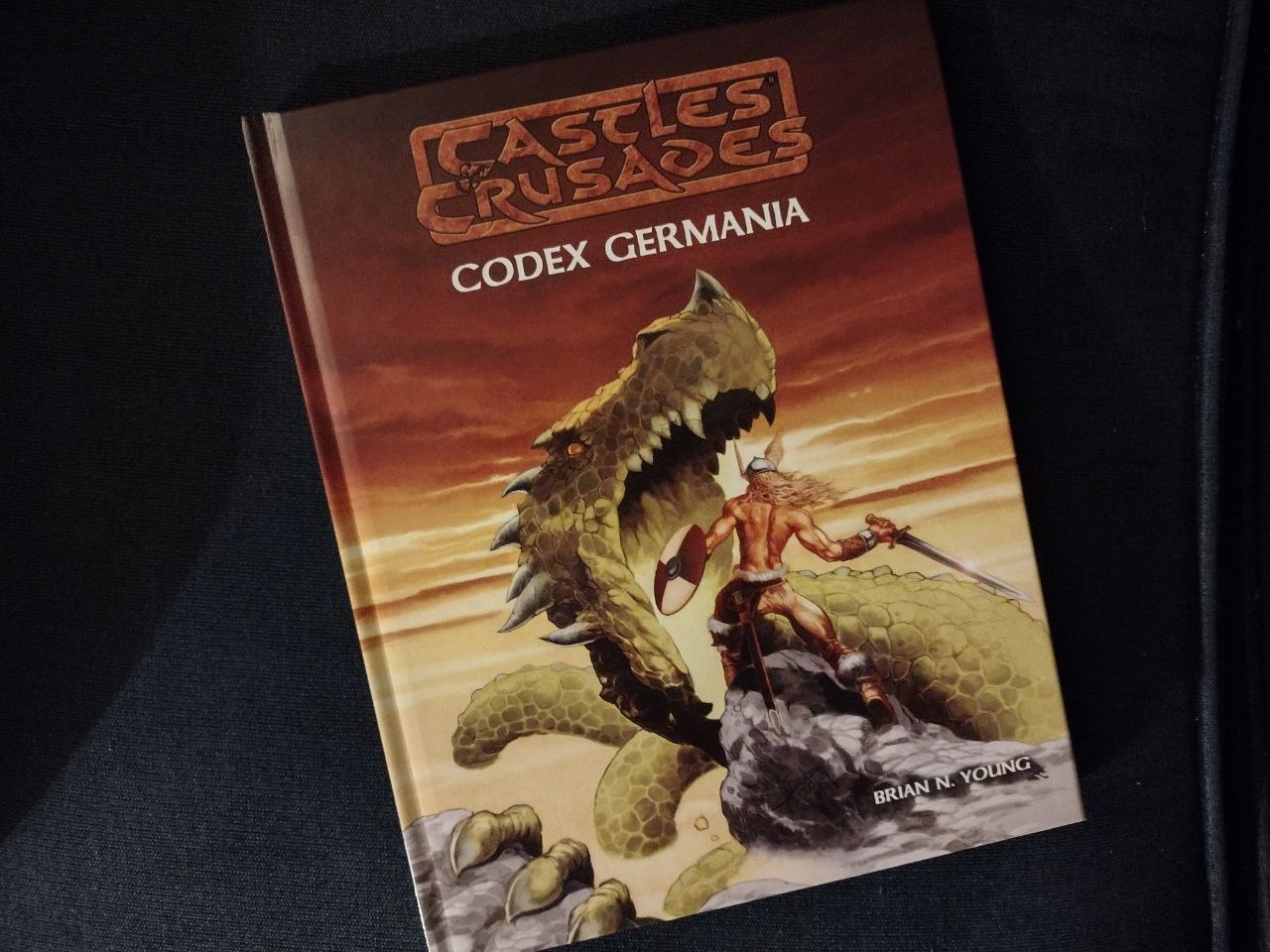
There was Codex Germania from Castles & Crusades, however you might have noted that Thrasamund and his new mortal companion have relocated to Athens, or it’s suburb and I had to use Codex Classicum to introduce a little bit of lore.
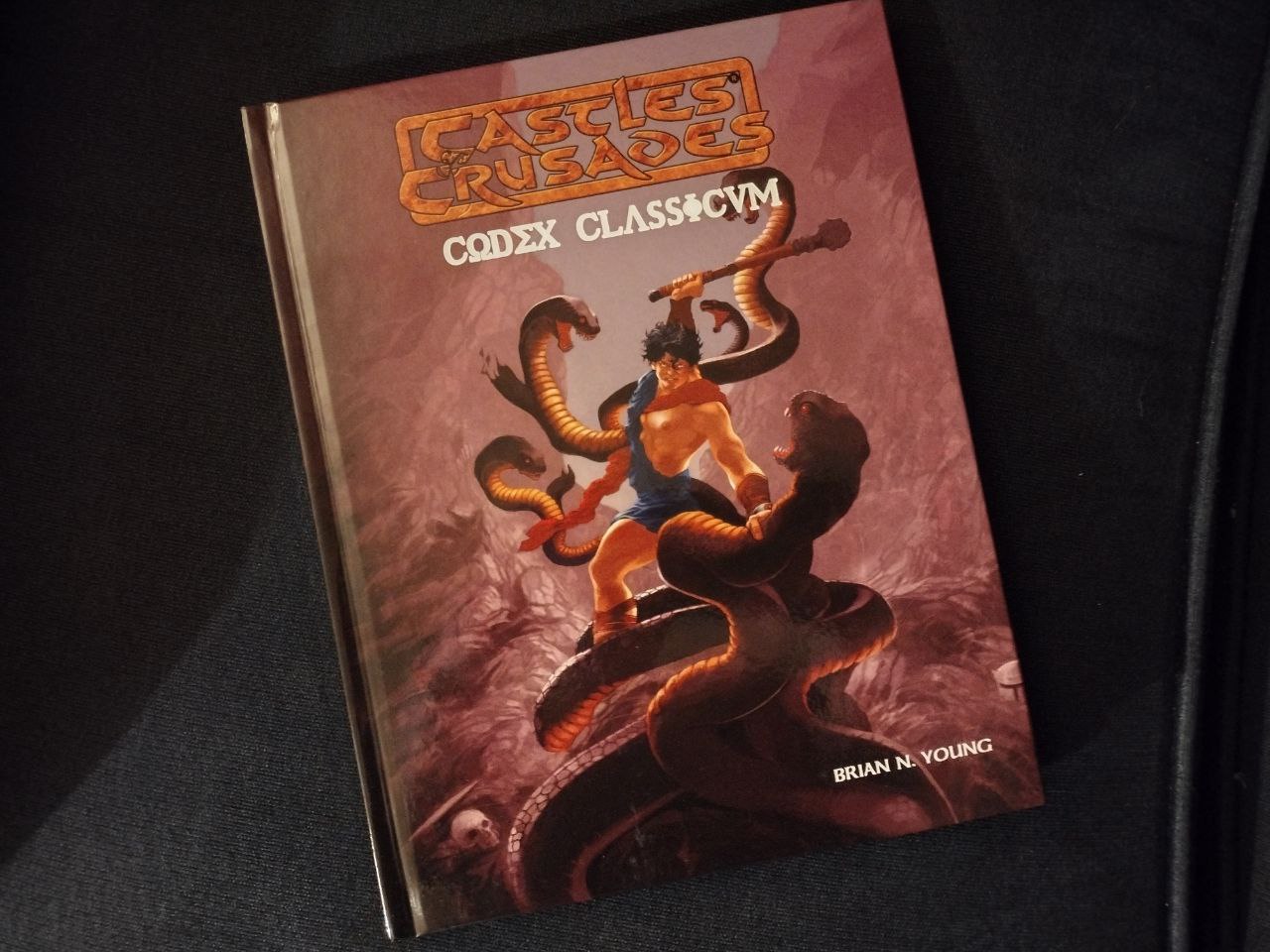
The thing about these books is that they’re extremely well-researched and contains a lot of facts centered around the mythology and cultures in which my character would find himself. Also, if you’re not getting all this rich history and this huge tapestry of me spending page after page of description of the areas they’re in, it’s because Thrasamund is telling his story and the biggest trouble with this is spending a lot of time manually writing all of that down and then typing it. In the interest of time and keeping things on point, Thrasamund can be a bit of a myopic character. When you read the next passage, you’ll understand.
But what makes these Codeces so useful is that I’ve created a character and immersed myself mentally in those worlds. I know a little more about Greek and Germanic society now than I ever have. I even explore the topic of what a vampire is to different cultures then. Remember, Vlad the Impaler wouldn’t pop up until the 15th Century and when he and myth collided, that’s where we got most of our modern-day vampire characteristics but while Thrasamund is in those settings, those settings have rules and I try to play within those rules. Thrasamund knows he lives on the outskirts of a major city. He’s trying to remain undetected. He has a companion to think about. He’s not concerned with what those around him are doing to appease Hecate or Apollo but those things are there in the book.
When applied to a well-written, well-researched book, using an RPG is a great way to explore history and learn more. With some research, your stories can become more vibrant. While I’m writing my entries in longer form, you can take the short-form or write even longer entries.
One of the other things I suggest as an optional way to play Thousand Year Old Vampire is what I like to call, in tribute to one of my favorite Anne Rice books, Interview With The Vampire. Two players will take on two different roles. One will be the journalist character and the other will play the vampire. The Vampire Player will create a character according to the book’s rules and The Journalist Player will then take the book and begin rolling. Start at prompt 1. Turn Prompt 1 into a question or maybe more questions, making certain to note any skills, memories or resources that need to be checked, added or lost. Roll again and move, turn that prompt into questions. This process continues until The Journalist Player is satisfied with the list of questions they’ve come up with.
Play begins when both players sit at the table. From here on out, no more rolling. The Journalist Places a digital voice recorder or some other means of recording. The Journalist then asks questions and records The Vampire’s responses. The game ends when the Jounalists publishes their Interview to a blog in the form of audio clips, transcript or writes an entire article, but the Vampire is never seen again.
Combining this with history, whether ancestral or not, can be a great way to appeal to a younger person’s curriculum because, once the people involved have a vested interest in learning then you have the ability to make facts stick. End of the session is a great time to point out what points were historically accurate and which ones you took liberties with when you presented them.
You don’t need a time machine to run back to see the battle of Thermopylae if you’re spending your time playing in it. Really want to teach about The Ming Dynasty? Let the kid create a character and let them immerse themself in that time period and you won’t be force-feeding them dates, names, etc in a cold and clinical matter which disinterests most students.
 The Ravens Nest
Leave a comment